
By Scott Gilbert
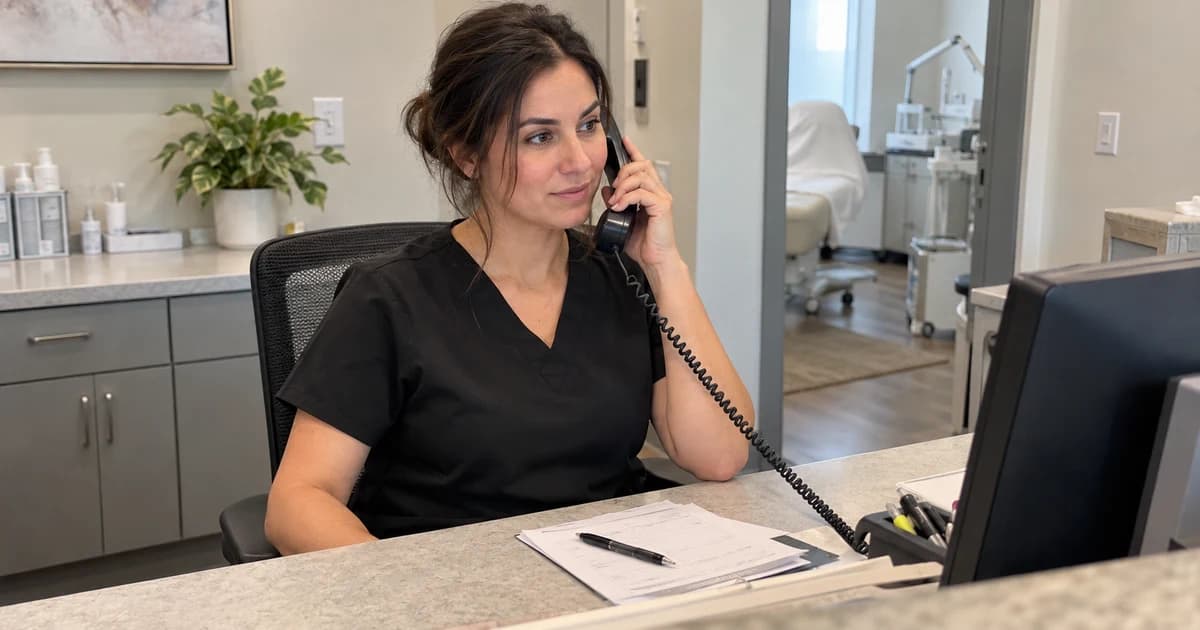
Medspa missed phone calls
Measure the call before pricing the loss.
Use your call records and known outcomes to separate unanswered demand from assumptions about lost revenue.
Missed calls deserve attention, but every unanswered ring is not a lost new client. The caller may be an existing client, a supplier, a duplicate attempt or someone asking a question before deciding. Start with your own call records and follow the outcomes you can verify.
The useful question is whether interested people reach your team and receive a suitable next step. An industry percentage cannot tell you where your clinic needs coverage.
If the first time you see an inquiry is when you clear voicemail at closing, the report arrived after the opportunity to help in the moment.
Count callers separately from attempts
Choose a period that includes your normal staffed days and the hours when calls go unanswered. Record incoming calls, answered calls, missed calls and callback attempts. Where the records allow it, group repeated attempts from the same person without publishing their identity.
Classify known purposes: new inquiry, existing-client question, administrative call or unknown. Do not label unknown callers as new-client demand merely to make the loss estimate bigger.
Then follow missed inquiries through callback, two-way contact, booking and attendance. A callback attempt is work completed by the team. It is not proof you reached the person. A missed call that later becomes an attended appointment has a different outcome from one that remains unresolved.
Look at when the desk cannot answer
Put the call times beside the reception schedule and the work actually happening. Calls may cluster during check-in, breaks, shift changes or after closing. Different patterns need different coverage decisions.
The person at the desk may be serving the client standing in front of them while the phone rings. That conflict needs a priority and a backup. Telling staff to answer faster leaves the two tasks competing for the same person.
Give a named person ownership of the unanswered queue, including what happens when that person is away. Record the offer and relevant question when the caller shares them so a return call continues the conversation.
Make the callback useful
My nurture method emphasises fast replies, personal communication and availability. Apply that to the actual inquiry instead of sending every missed caller the same sales message.
For an illustrative callback: “Hi Sam, it's Alex from Clinic XYZ, returning your call. What can I help you with?” The names are examples. Do not assume the caller wants the treatment currently advertised.
If the question is about booking, explain the consultation and offer real times. If it concerns treatment suitability or a clinical concern, hand it to the appropriate qualified person. An unanswered-call workflow needs that distinction before a vendor or automation can safely follow it.
Price only what your records support
You can measure known acquisition costs and collected revenue from clients you reached. You cannot know what every unresolved caller would have spent.
A hypothetical model can still help you compare coverage options if its assumptions are explicit. Suppose there are 20 unresolved new inquiries, and you assume that five additional people could book and attend, with two purchasing $400 services. That scenario produces $800 in gross sales. It does not prove those people would buy, and it excludes treatment costs, coverage costs and overhead.
Change the assumptions and the estimate changes. Keep a range if you do not have enough history, and call the result possible sales under those assumptions. Avoid presenting it as recovered profit or money the clinic has already lost.
Fix one coverage gap and follow it through
Choose the recurring gap your records show. Assign the answer and callback responsibilities, train a backup and make sure both people know the offer and escalation path. If you use an external service, test what it can actually do with your consultation rules and current calendar.
Review contact and booking outcomes after the change. Then check attendance and suitable purchases as the appointments become due. Better answer coverage should lead to a clearer client journey, not just a better call statistic.
Bring the call pattern and known outcomes to getdart.ai if you want help weighing the next change. Keep unknown callers and hypothetical sales separate from verified clinic results.
Explore Dart for your clinic
See how Dart works